

East Africa Permaculture – Dec 2025 Progress Update
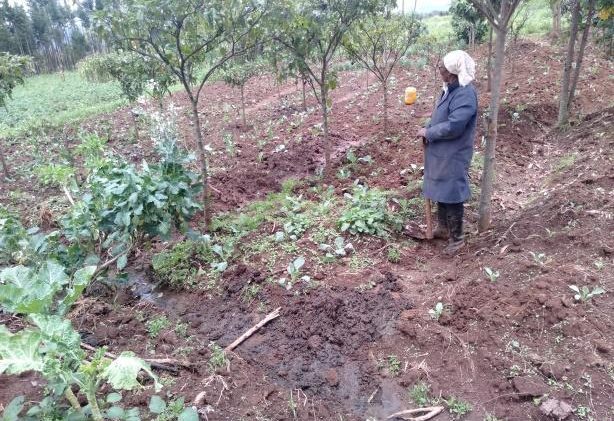
Our permaculture work in East Africa continues to grow steadily and practically, especially in the Molo–Nakuru region of Kenya. What began as demonstration gardens is now becoming a way of life that local families rely on—through both rainy and dry seasons.
Permaculture does not depend on “good weather years.” Once the system is installed, it keeps producing, and we focus on incremental improvements so that each site becomes more diverse, more resilient, and more productive over time.
Real Impact on Real Families
One of the clearest examples of this impact is Christine, a mother working at one of our permaculture sites.
Her young daughter had been suffering from malnutrition and was frequently in and out of the hospital. Since Christine began working on the permaculture site, she has been able to bring home pure, fresh, organic food. We’ve also supported her with guidance on what meals to prepare for her daughter.
The result? In the last four months, Christine has not reported any further problems with malnutrition, and hospital visits have dropped dramatically.
Permaculture is not just about growing plants. It’s improving health, cutting medical costs, and giving families a steady supply of nutritious food—without chemical fertilizers.
Building Healthy Soil & Strong Systems
On our main sites, we’ve been focused on:
- Soil building – improving soil structure and fertility so the land becomes richer each season.
- Incremental design – carefully planning and refining garden layouts to increase productivity and make work easier for local families.
- Diversity of crops – mixing vegetables, fruit trees, and other plants so that something is always in season.
We are also expanding and refining our fruit forest systems. Some of the fruit trees planted earlier are now beginning to produce.
Bananas, Papayas – and Persistence
One of the most encouraging signs has been the banana plants.
When we first planted them, many people doubted they would ever produce because of the local climate conditions. The ecosystem didn’t seem favorable for bananas. But we believed in the design and the process.
Now, those same banana plants are finally bearing fruit.
Alongside them, mountain papaya and other fruit trees are also developing, proving that a well-designed permaculture system can adapt and thrive even in challenging conditions.
Seedlings, Crop Rotation & Pest Control
Instead of relying heavily on buying seedlings, we now raise many of our own:
- Nursery beds have been established in the Kisii Ndogo community.
- We buy only specific seedlings that require greenhouse conditions (such as certain fruit trees).


On our sites you’ll find:
- Wilson planting “sniper” seedlings (a non-acidic kale variety).
- Monica working on replanting and filling gaps after harvesting.


After each harvest, we practice crop rotation to break the life cycles of pests and reduce soil-borne diseases naturally. This keeps the soil healthier and reduces the need for chemical interventions.
Looking Ahead: Peak Vegetable Season
We are now targeting the December–January period as a key production window.
This is the time of year when most people walk long distances to fetch vegetables. Our goal is that by then, the diversity and productivity of our garden layouts will be at their peak—so that families can access fresh, local produce right in their own communities.
Gratitude
None of this would be happening without ongoing support.
We extend our sincere thanks to Mr. and Mrs. Mark Holland and their friends for faithfully supporting East Africa Permaculture across the different communities. Their commitment makes it possible to:
- Install and maintain permanent permaculture systems
- Support and monitor each site
- Provide work and income to the two women who help manage the permaculture gardens and keep them progressing year-round
Summary:
East Africa Permaculture is delivering exactly what it was designed to do:
- Healthier families
- Stronger local food systems
- Permanent, sustainable production that does not depend on “good seasons”
And step by step, other nearby communities are watching, learning, and beginning to copy what they see.


